
2026 Annual Research Forum: Resident WinnerSAFE KIDS - Study of Accuracy and Frequency of Errors in Kids’ Dosing in Acute Care SettingsFirst Author: Dharshana Krishnaprasadh, MD; Texas Tech University Health Sciences - Lubbock
Background: Medication dosing errors are one of the leading causes of preventable harm in pediatric medical care. Despite the prevalence of dosing errors in pediatric emergency departments (ED) being well demonstrated, far fewer studies have been done addressing this issue in a similar environment of urgent care (UC). This study compares the weight-based dosing errors in pediatric antibiotic prescriptions in the acute care setting - PED vs. UC settings and assesses the prescribing accuracy between provider types. Methods: This was a retrospective observational study of pediatric patients (0-17 years) receiving outpatient prescriptions for antibiotics in an acute care setting. The sample included patients seen within the same healthcare system in an academic emergency and/or urgent care center between January 1 and June 30, 2023.The primary outcome was the proportion of prescriptions that were written with correct weight-based dosing within a 10 percent margin for antibiotics prescribed for otitis media and pharyngitis. The secondary outcome was to compare prescribing accuracy between provider types emergency physicians (EP) and advanced practice providers (APP), using Pearson's Chi-Square Test. Results: There were 1,979 unique prescriptions written during the study period. Patients diagnosed with otitis media received the correct weight-based dose 74.4 percent of the time in PED compared to 48.5 percent of the time with UC (p = 0.000). Patients diagnosed with pharyngitis received the correct weight-based dose 47.1 percent of the time in PED compared to 41.4 percent with UC providers (p = 0.011). For otitis media, EP had a significantly lower risk of inaccurate antibiotic dosing (under- or overdosing) compared with APP (p< 0.001). For pharyngitis/tonsillitis, underdosing risk did not differ by provider type (p = 0.459), while EP had a significantly lower risk of overdosing compared with APP (p< 0.001). 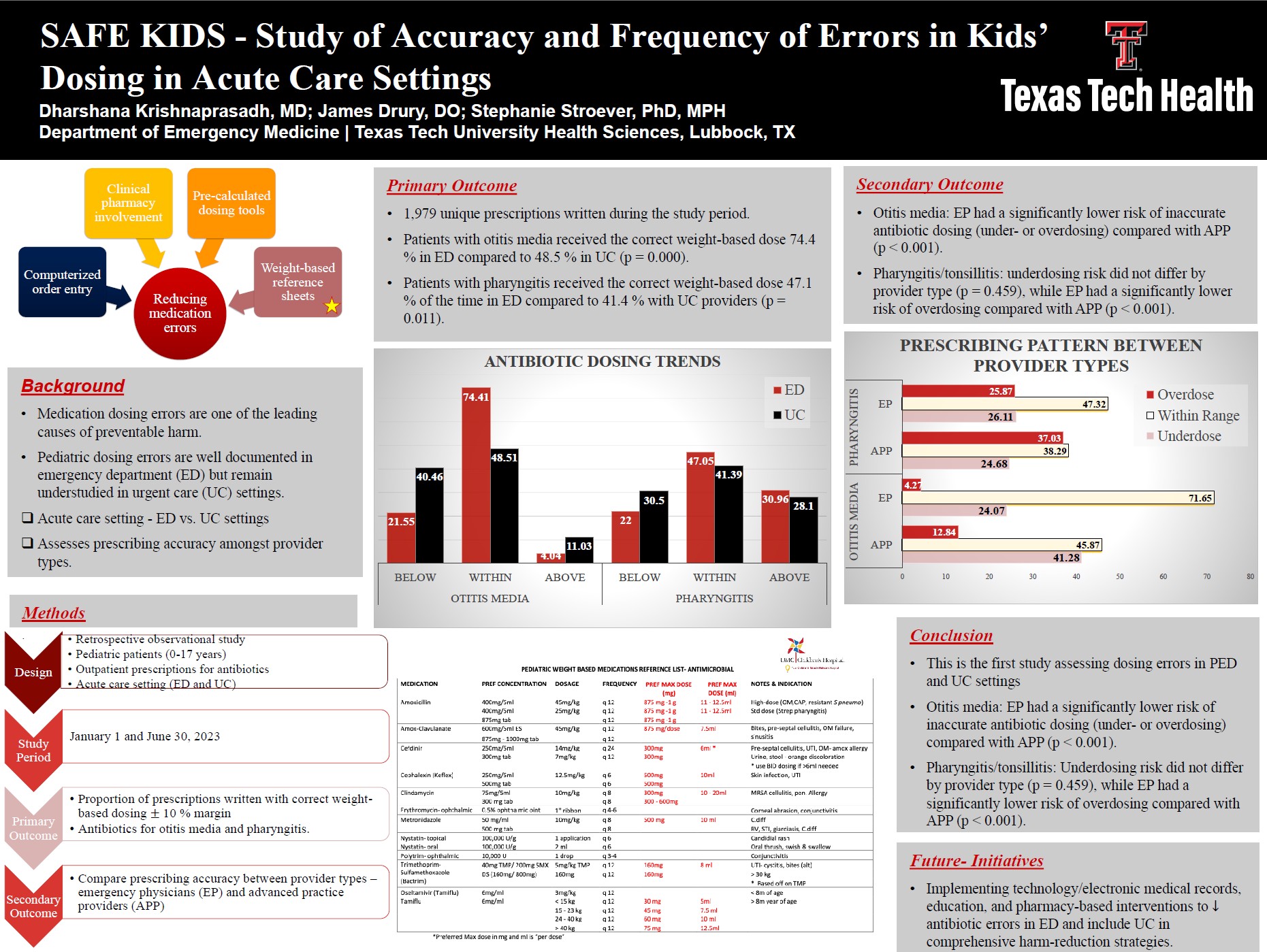 |
 Co-Authors: James Drury, DO and Stephanie Stroever, PhD, MPH